Q1. What is a titanium-nickel composite panel?
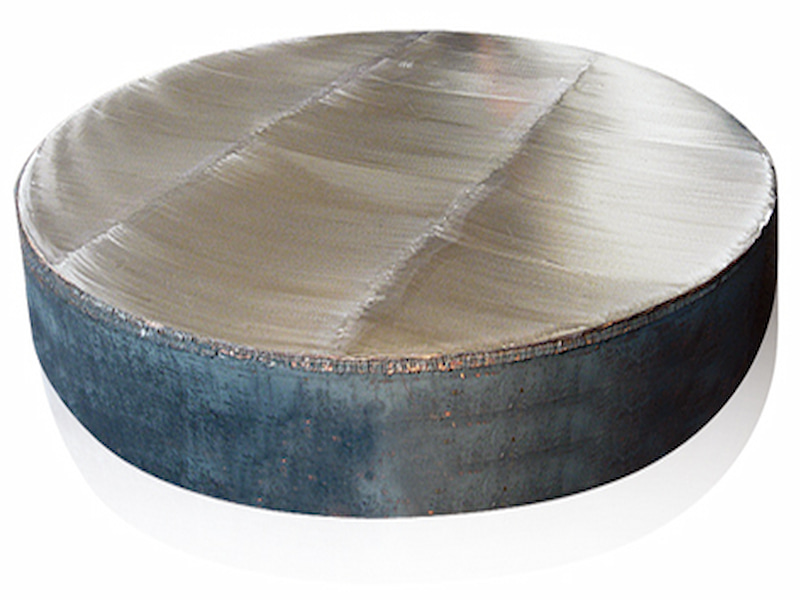
A: It is a composite material consisting of a corrosion-resistant titanium layer bonded to a ductile nickel interlayer, or nickel matrix. It is usually combined with steel or aluminum for structural support. The nickel layer acts as a diffusion barrier, preventing the formation of brittle titanium-iron compounds and strengthening the interface.
Q2. Why use nickel as an interlayer?
A: Nickel is essential in:
1) Preventing brittle phases: Direct bonding of titanium to steel leads to the formation of TiFe/TiFe₂ intermetallic compounds, which reduce strength. Nickel prevents the diffusion of TiFe/TiFe₂ and enables a strong bond.
Improved weldability: Nickel's ductility enables it to withstand thermal stresses during welding or high-temperature processing.
Thermal conductivity gradient: In multilayer composites, such as Al/Ti/Ni/steel, nickel optimizes heat transfer in low-temperature applications, such as joints on liquefied natural gas carriers.
Q3. How are these composite plates manufactured?
A: The main methods include:
Explosive welding:
This method is used for complex, multi-layer stacks (e.g., aluminum, titanium, nickel, and steel). The explosive force causes the metal layers to form a metallurgical bond at high velocity. Precise control of explosive density (0.4–1.0 g/cm³) and spacing (3–15 mm) is required.
Hot roll welding:
Symmetrical "steel/titanium/nickel foil/steel" stacks are vacuum-sealed, heated to between 780 and 1000 degrees Celsius, and rolled with at least 70% deformation. The 0.5 mm nickel foil ensures that the formation of intermetallic compounds is minimized.
Friendly Link :
diyiye.com
Copyright @ 2026 Nanjing Baotai Special Materials Co., Ltd. All Rights Reserved.  Network Supported