Q1: What is a titanium-steel composite panel?
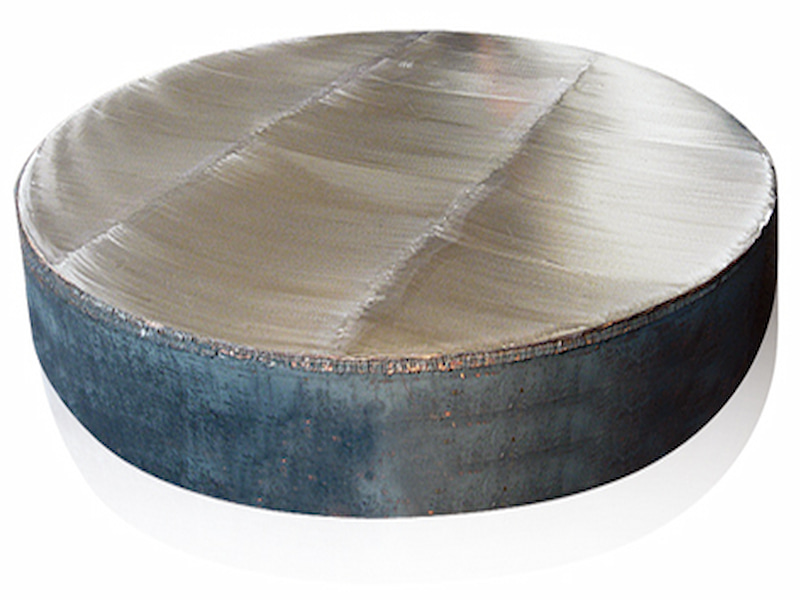
A: It is a composite material consisting of a thin corrosion-resistant titanium layer (the "composite" layer) that is permanently bonded to a thicker, structurally sound base layer of carbon or low-alloy steel. The two metals retain their individual properties yet function as a single unit.
Q2: Why use titanium-steel composite panels instead of pure titanium or steel sheets?
A: It combines the advantages of both.
○Cost Effectiveness: It is much cheaper than using pure titanium for the entire structure because titanium is only needed for surfaces exposed to corrosion.
○Structural strength: The steel base layer provides the necessary mechanical strength and stiffness for demanding applications, such as pressure vessels or structural components.
○Excellent corrosion resistance: Titanium layers are highly resistant to harsh environments (acids, chlorides, and seawater), whereas pure steel corrodes rapidly, even when coated.
Q3: What are the main applications of titanium steel composite panels?
A: Titanium steel composite panels are essential in industries where corrosion resistance and structural integrity are critical.
○Chemical and petrochemical processing: reactors, towers, heat exchangers, and storage tanks that handle corrosive acids (HCl, H₂SO₄, HNO₃, etc.) and chlorides.
○Power generation: Flue gas desulfurization (FGD) systems, condenser shells, and heat recovery equipment.
○Desalination and water treatment: Multi-stage flash (MSF) evaporators, reverse osmosis (RO) pressure vessels, and brine heaters.
○Marine and Offshore: Seawater piping systems, ballast tanks, and hull components for specialized vessels.
○Pulp and Paper Industry: Bleach Plants and Digesters
○Pollution control equipment includes scrubbers and chimneys.
Q4: How are titanium-steel composite panels manufactured?
A: The main industrial methods are:
Explosive welding (explosive composite): Uses a precisely controlled explosive force to form a metallurgical bond at the interface. This is the most commonly used method.
Rolling composite: Plates are heated and composited by rolling under high pressure. Multiple welds are usually required.
Cladding: Multiple layers of titanium weld metal are deposited on a steel substrate. Cladding is more commonly used for complex shapes or repairs than for producing initial plates.
Q5: What is the bond strength between the titanium and steel layers?
A: The bond strength achieved by explosion welding or roll lamination is extremely high, often exceeding the shear strength of the titanium layer itself. This process forms a true metallurgical bond, ensuring that the layers remain composite under load and preventing delamination under normal operating conditions.
Friendly Link :
diyiye.com
Copyright @ 2026 Nanjing Baotai Special Materials Co., Ltd. All Rights Reserved.  Network Supported